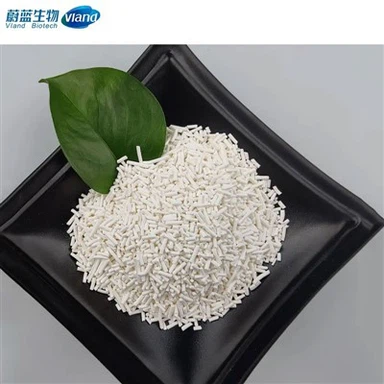
Immobilized lipase extraction method steps
Apr 25, 2024
1. Select the immobilization carrier: First select the appropriate immobilization carrier, such as nanoporous materials, large ligand porous materials, carbon skeleton porous materials, silica skeleton porous materials, and polymer porous materials.
2. Pretreatment carrier: Perform necessary pretreatment on the carrier, such as soaking the macroporous resin in ethanol solution to fully swell it, and then cleaning it with distilled water until there is no obvious ethanol smell.
3. Enzyme adsorption: Mix the pretreated carrier with the solution containing lipase, and fix the enzyme on the carrier through adsorption. This step may need to be performed under specific temperature and pH conditions to optimize adsorption efficiency.
4. Use of cross-linking agents: In order to enhance the binding between the enzyme and the carrier, cross-linking agents such as glutaraldehyde, genipin or the new epoxy cross-linking agent polyethylene glycol diglycidyl ether may be used.
5. Washing and drying of immobilized enzyme: After the adsorption and cross-linking process is completed, unimmobilized enzyme and impurities are removed by filtration and washing, and then the immobilized enzyme is dried or dried.
6. Activity determination: Use an appropriate method to determine the activity of immobilized lipase, such as modified copper soap spectrophotometry.
7. Optimize immobilization conditions: Optimize immobilization conditions, such as adsorption temperature, pH, cross-linking time and cross-linking agent concentration, through single factor experiments and orthogonal experiments.
8. Response surface method: Use response surface method to further optimize the immobilization conditions to obtain the best immobilization effect.
9. Stability test: The immobilized lipase was tested for thermal stability, acid-base stability, operational stability and storage stability to evaluate its performance under different conditions.